
Italian Chef Academy – second week
At the beginning of the second week, it quickly becomes clear that we are no longer talking about the basics. We take a step further — the work becomes more technical.
The pasta marathon of the first week has thoroughly tested both body and mind, but now we dive deep into the true world of Italian culinary art: into the details, the techniques, the sensibility, and the mindset.
One essential truth becomes clear quite quickly: the very same dish can be simply food or a truly elevated experience — it all depends on how it is prepared and presented.
In Italian cuisine, a dish does not begin with pasta — it begins with the sauce.
Pasta is like a canvas, and the sauce is the Picasso painting upon it. That is precisely why we spend three long days immersed in the world of sauces, exploring both slow and faster techniques.
A good tomato sauce is made slowly. Very slowly. Fresh or crushed tomatoes, good olive oil, garlic, onion, fresh basil. Nothing more is needed, and yet this sauce requires hours of gentle simmering for its flavours to truly раскры—to fully open up.
As it cooks, the tomatoes become sweeter, their acidity softens, and the olive oil binds everything into a harmonious whole. This is the foundation sauce behind hundreds of pasta dishes — from a simple spaghetti al pomodoro to more complex ragù.
It is also here that the most mistakes are made: heat that is too high, cooking that is rushed, poor-quality ingredients, the wrong oil. And yes — the oil is always extra virgin.
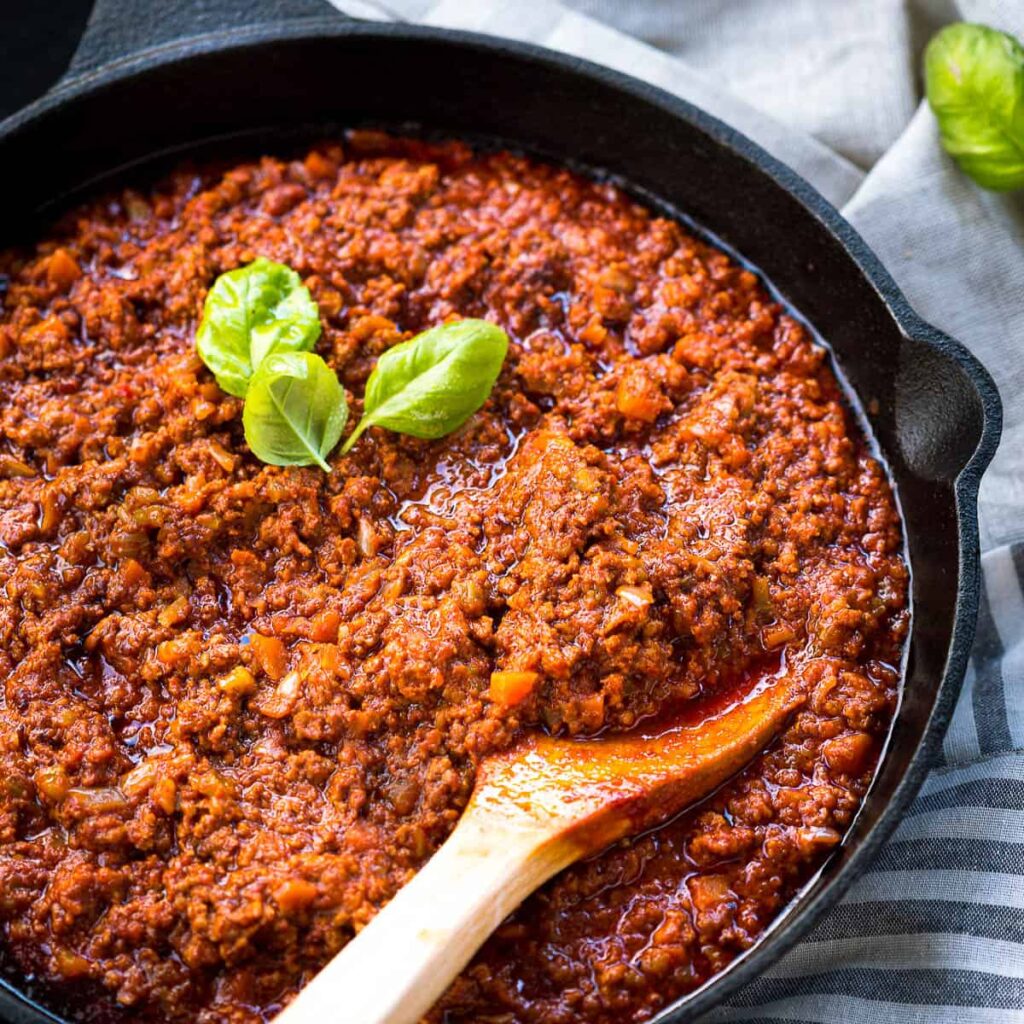
A true ragù is not made from minced meat, but from finely chopped meat, and it is built layer by layer: soffritto, meat, vegetables, wine, stock, tomato — followed by hours of quiet, gentle simmering. We begin in the morning and enjoy the result in the evening. A proper ragù is not red, but warm, brownish, and silky — the kind that clings beautifully to the pasta rather than spreading across the plate.
My favourite sauce of the week comes from Liguria: an anchovy and broccoli sauce.
In northern Italy, it sometimes feels as though a different culinary language is spoken — anchovies appear in almost everything, joined by capers, garlic, broccoli, and a touch of chilli. What makes this sauce truly special is the anchovy itself: it doesn’t remain in the sauce as identifiable fish, but melts completely in the pan, becoming invisible and leaving behind only a deep, lingering umami.
And now comes the most important moment — pasta meets the sauce in the pan, not on the plate.
When the pasta is cooked firmly al dente, it is transferred to the sauce along with a small amount of its cooking water, and a magical process begins: tossare (active tossing in the pan) and mantecatura (emulsifying the sauce). Pasta water contains starch, and with the right movements, heat, and amount of liquid, an emulsion forms in which oil, water, and sauce come together into one creamy, cohesive whole.
Our teachers repeat this constantly: we are not here simply to learn how to cook dishes by following recipes — we are learning to think like Italian chefs. We are continually encouraged to let go of old habits and to truly absorb the tips and principles shared with us from morning to night.
Lemon is not merely a garnish in Italian cuisine.
Lemon becomes one of the main protagonists of the week. Although lemon-flavoured pasta is not considered a classic by Italians, lemon plays a vital role as a cleanser, an awakener, and a balancer.
We prepare octopus, and into the cooking water Angela adds six halved lemons, letting them gently simmer together with the octopus for 40 minutes. According to Angela, lemon doesn’t only add acidity — it softens the sea itself. And the result proves her right: the octopus is lightly tangy and incredibly rich in umami.
Risoto kui meditatsioon
From MasterChef Estonia, it has been repeatedly clear how important proper risotto texture and balanced flavours are to Orm Oja. I have always considered myself a fairly experienced risotto maker — until today.
What feels al dente to an Estonian is not al dente to an Italian. Once again, technique makes all the difference.
According to Angela, the technique I have learned so far isn’t wrong — Italians simply do it differently. Well said.
The foundation of everything is an excellent stock. For this, we make the stock from ossobuco — osso meaning bone, buco meaning hole. The marrow is a crucial source of flavour, and we melt it separately at a very gentle temperature.

When it comes to rice, the instructors’ recommendations are clear: the Arborio commonly sold in Estonia is not a first choice — it should be a last resort. Carnaroli or Vialone Nano should be preferred, although the former is extremely expensive in Estonia and the latter is hardly available at all.
Risotto preparation begins with tostatura: the rice is heated in a dry pot, without any fat, stirred constantly until it is hot but definitely not browned. This changes the structure of the grain so that the risotto becomes creamy, while the rice itself remains al dente at the core.
.
In a second pot, the soffritto is prepared — butter, onion, and wine. Only then do these two worlds come together. Hot stock is added gradually, in small amounts.
Stirring is done with an upright spatula, working with the movement of the pot, not with circular, crushing motions. When the risotto is al dente, the pot is removed from the heat, butter is added, mantecatura is performed, the lid is put on, and it is left to rest for one minute. Only then is the Parmesan added.
When serving, the plate is tapped firmly from underneath with the palm of the hand so that the risotto spreads — this is how its residual cooking is stopped.
The world of flavours is endless: artichoke risotto is elegant; risotto with beer, chorizo, and blue cheese surprises; risotto made with red wine and chicory may not be the most visually appealing, but its flavour is outstanding.
Five students, one hundred percent intensity.
The rhythm of the second week is ultra-intensive. By Wednesday, the energy is completely spent. Normally, a single course at the Italian Chef Academy has around twenty students — we are only five.
That means one hundred percent attention, personalised guidance, and constant presence. The fatigue settles into the legs, the days are long, but the mind remains open and ready to absorb ever more techniques and approaches.
We don’t follow the curriculum in a rigid way alone. Along the way, a Portuguese student, Bianca, shares her recipe for herb-infused, fried polenta inspired by a restaurant in Madeira.
At my request, a schiacciata — Tuscany’s little brother to focaccia — also comes to life in the classroom. That wonderful flatbread, filled with rocket, mozzarella, and mortadella. Ask, and you get to make it yourself — and it is exactly this process that finally makes me realise what I’ve been doing wrong with my focaccia and schiacciata all along.
A dear friend, Gert, sends greetings from Estonia and asks me to bring back the recipe for a traditional Italian Christmas dessert. Angela is generous with her knowledge.
And so, to our great delight, we prepare panone di Bologna — a spiced Christmas cake rich with tradition and warmth.
It’s especially inspiring to learn in a kitchen where almost every idea can be put into practice immediately. Just as exciting is tasting the dishes prepared by Italian chefs training in the neighbouring classroom. They bring us the stars of their day, and we bring ours to them.
We discuss flavours, textures, and presentation. A professional dialogue is constantly unfolding. No one is simply a student or a teacher — everyone is part of one large Italian kitchen family.
And then there is the music. I have never thought about music in the kitchen quite like this before. When we shape tortellini and ravioli into their delicate forms, Andrea Bocelli fills the room. When we move on to sauces and risottos, U2and The Beatles take over the kitchen.
The rhythm shifts, the energy changes, and even the stirring takes on a different momentum.
The Final Day at the Italian Chef Academy — The Exam
The final day concludes with an exam. On the surface, it is simply a practical assessment: a fixed dish, a set time, an evaluation panel. In reality, it is the moment when you truly understand what you have learned.
Being part of the jury yourself makes it possible to taste everyone’s exam dishes — and to see just how different the results of the very same recipe can be.
The exam dishes are ravioli carbonara and pasta alla chitarra carbonara. The nerves are there — the fear of overcooking, of losing the sauce’s texture. And it is precisely there that the small “too al dente” mistake happens.
Even by Italian standards, my exam dishes turn out just a little too undercooked this time. Is that a better mistake than overcooking? Neither is good — a matter of seconds is enough to change the result completely. But now I know exactly what to do differently next time.
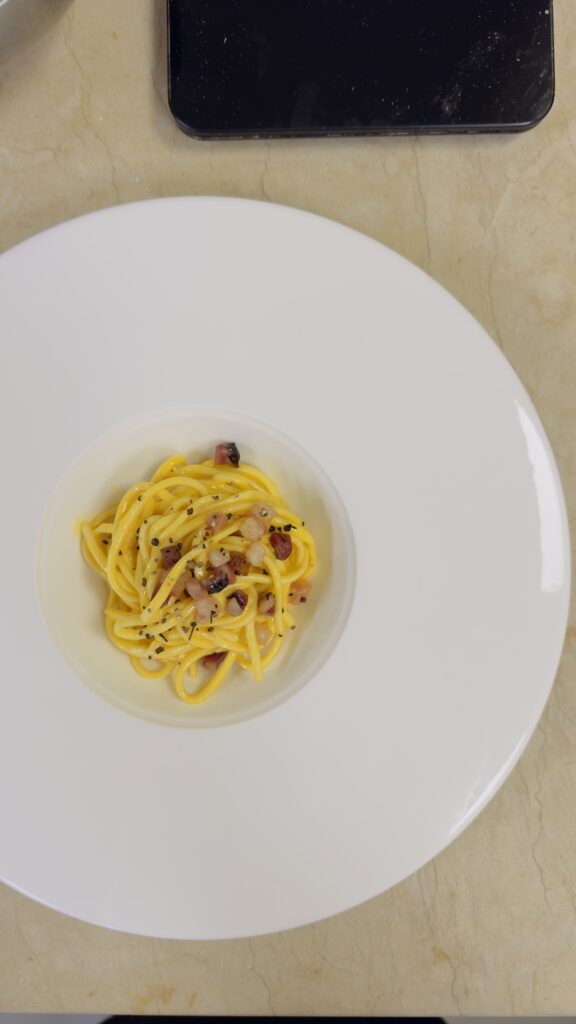
The jury is nevertheless very pleased with my dishes. The egg yolk flows from the ravioli exactly as it should. The sauce and the pasta alla chitarra are perfectly bound together — just as we were taught: in the pan, with heat, brought together with pasta water.
A diploma, applause, and a shared dinner at one of Florence’s most highly regarded restaurants, Zal Zal.
And then, the journey home can begin.
And yes — for now, the secret of combining 00 flour and semolina in pasta dough stays with me, as do the techniques behind the world’s best tortellini and a truffle–Parmesan sauce.
I’ll share all of that with you when, one day, we’re cooking Italian dishes together in the OHH kitchen.
If you’d like to come and cook Italian dishes with your friends or team at Old Hapsal Hotel, get in touch with us here.